
Temple’s Strongest: Stones, Sandbags and 90 Seconds of Misery
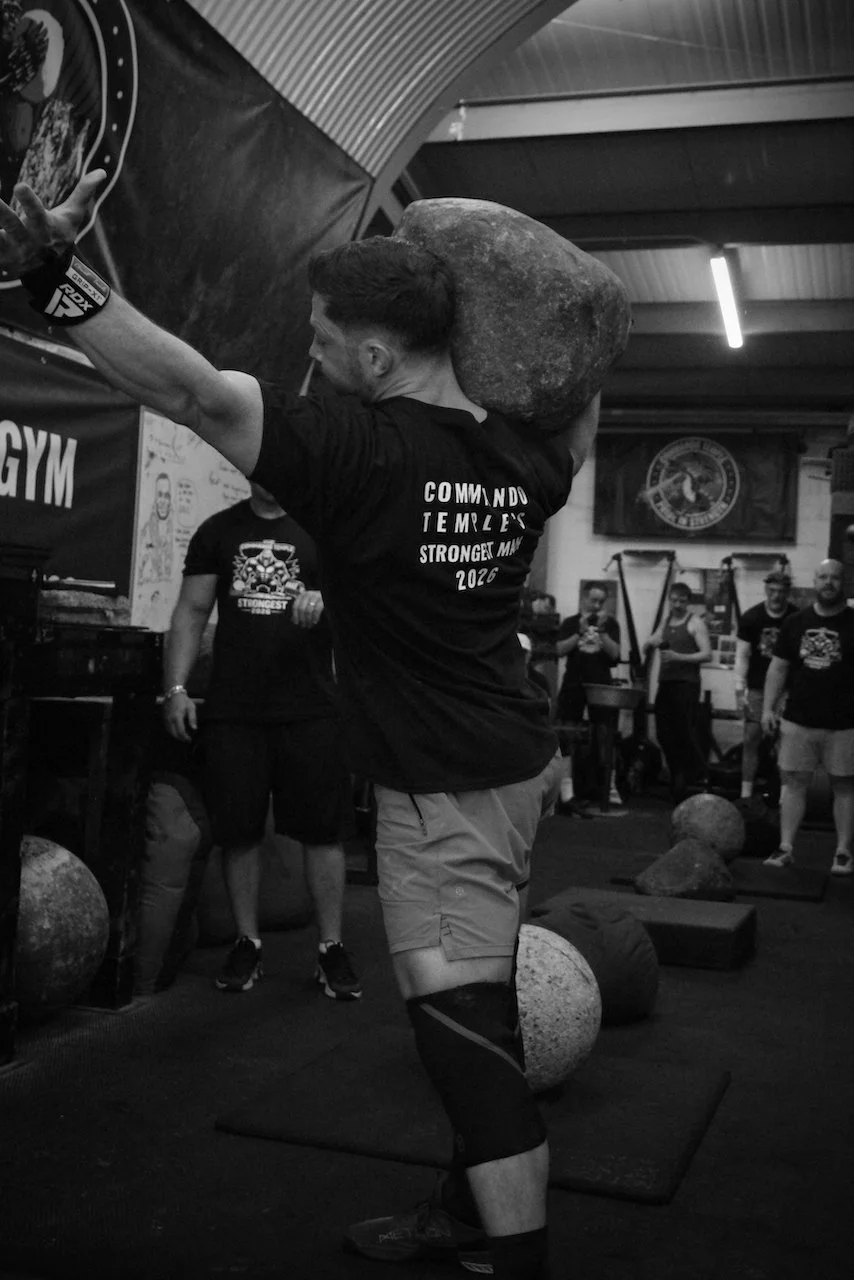
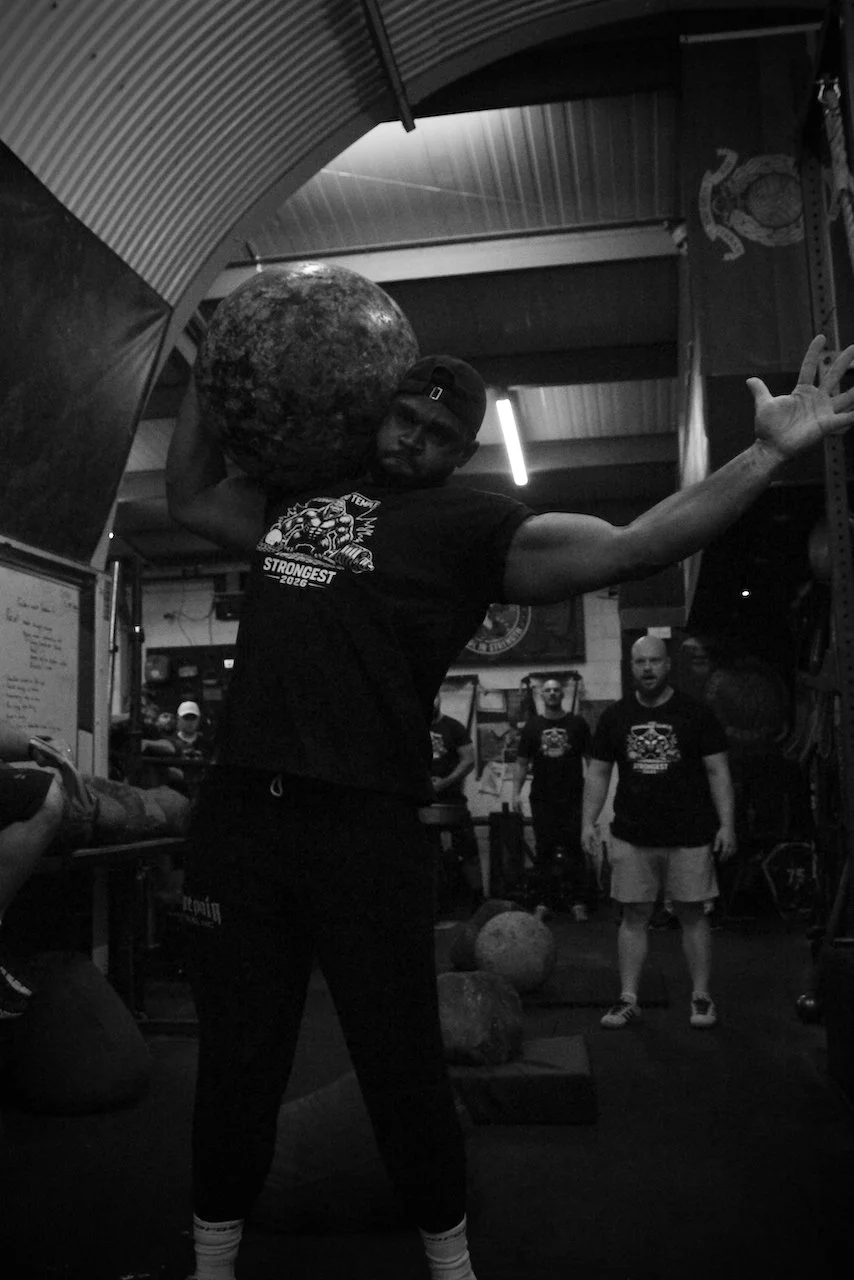
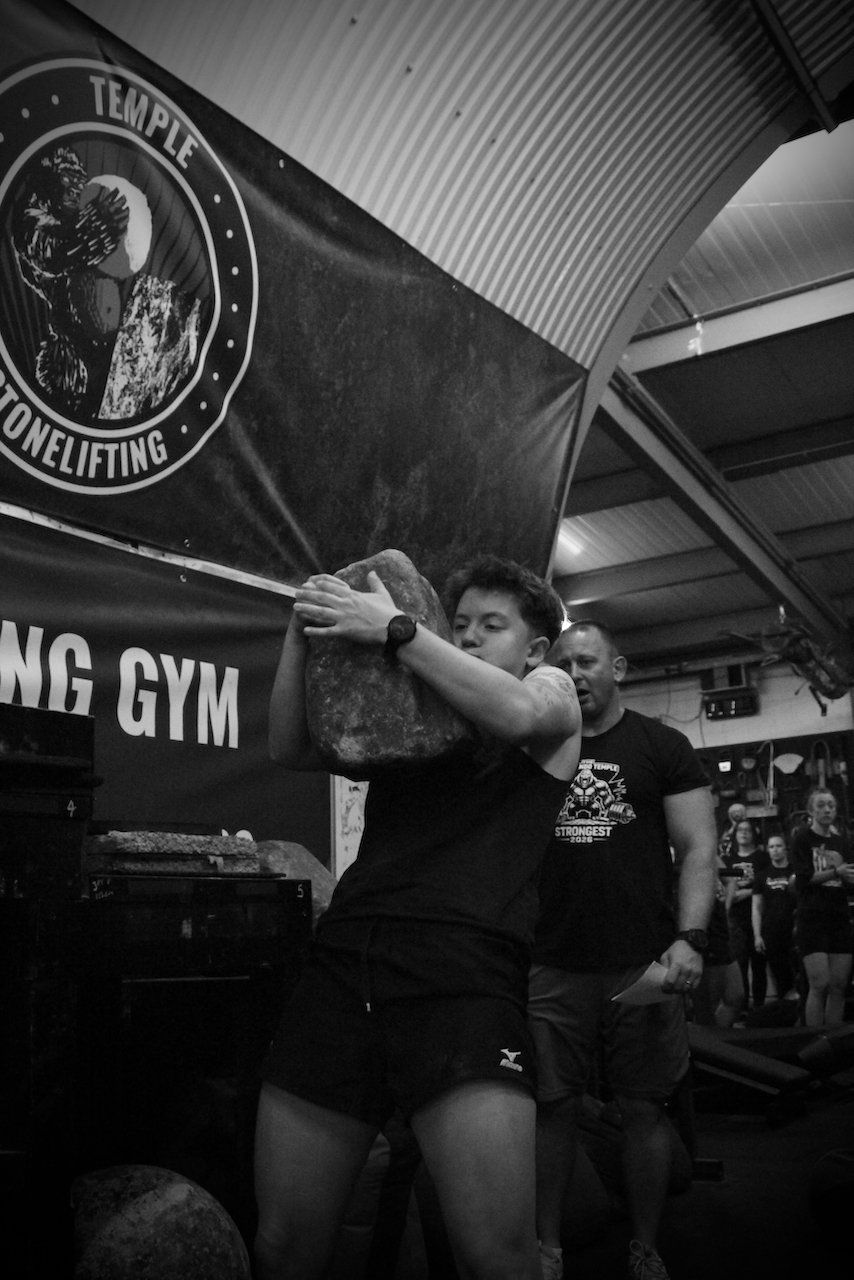
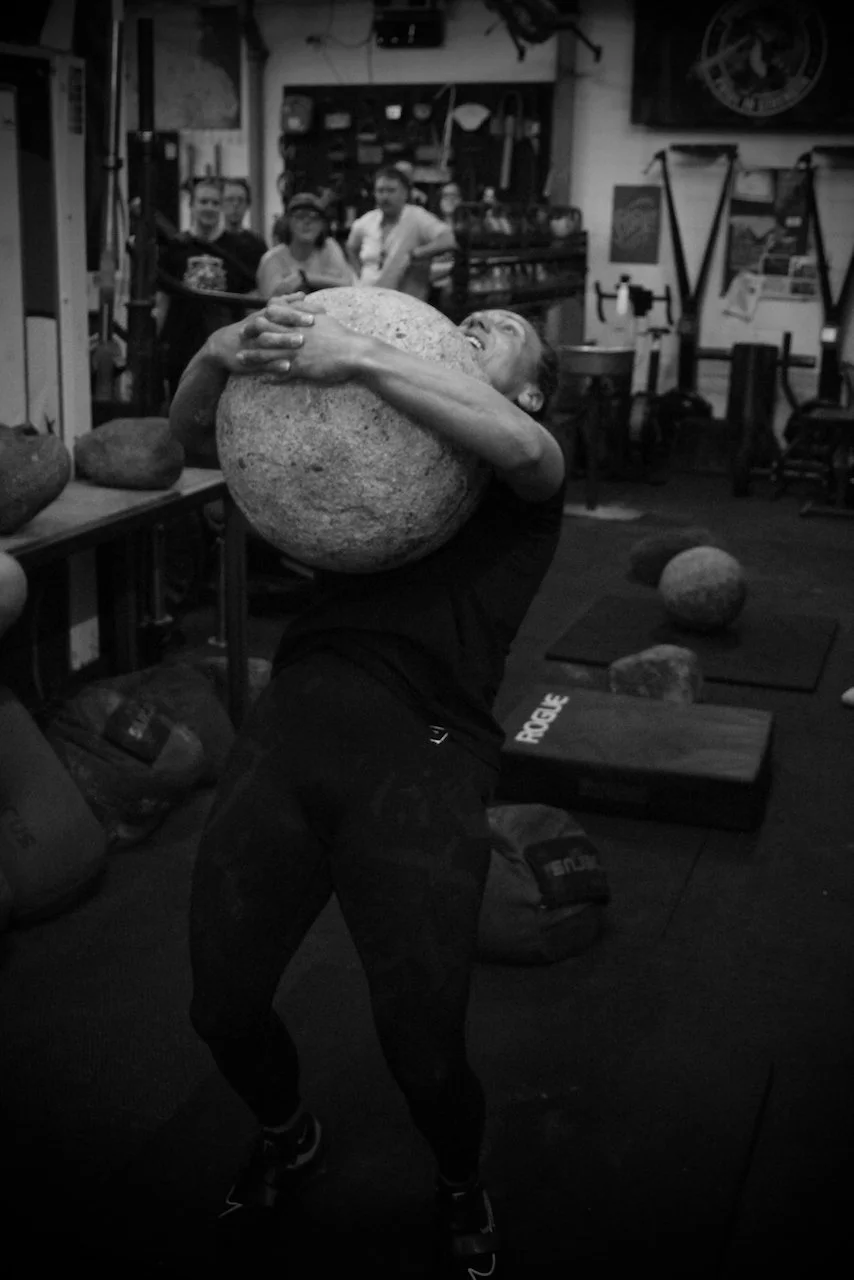
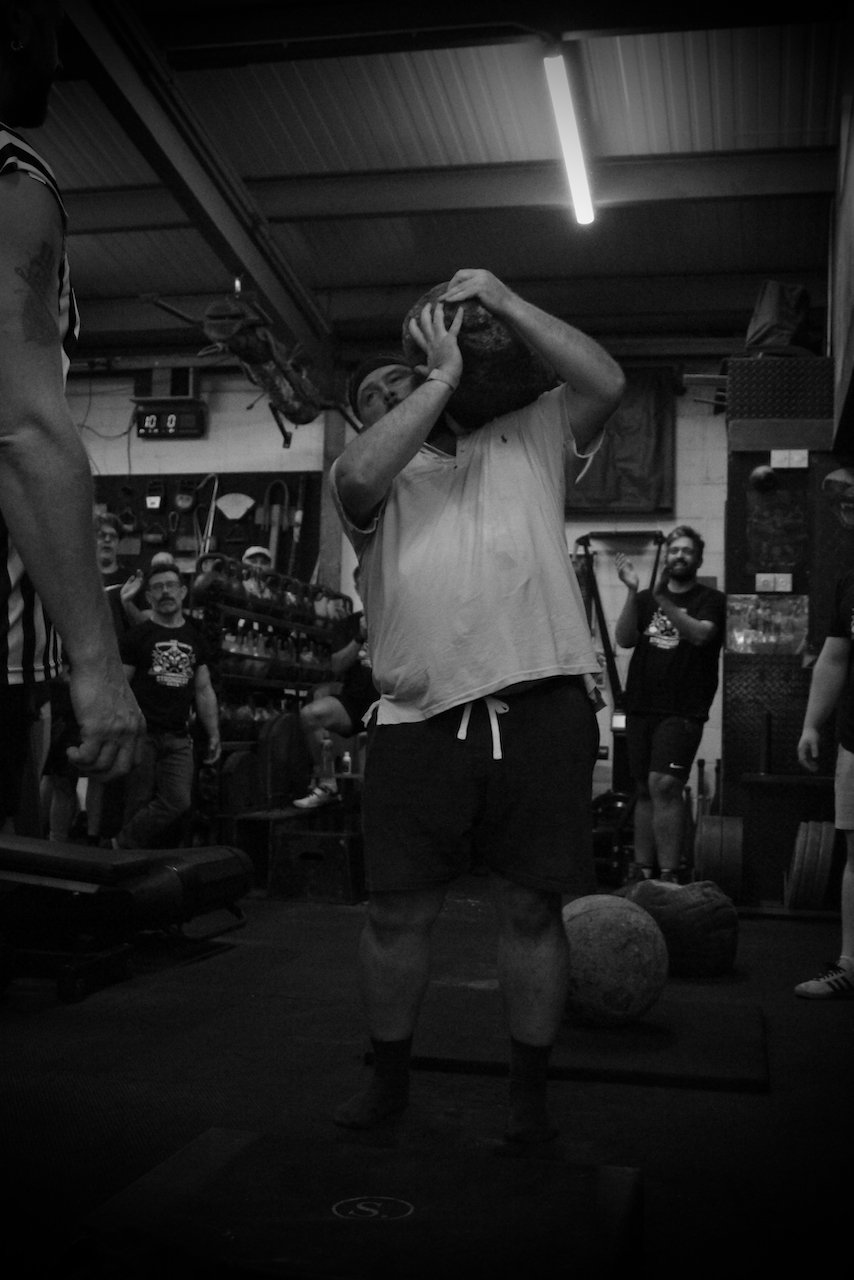
Every year, the Commando Temple in Deptford hosts Temple’s Strongest — a two-day strength competition organised by Charlie Clay, one of the coaches behind our weekly Stone Club.
And every year, Charlie finds a way of getting stones involved.
We approve.
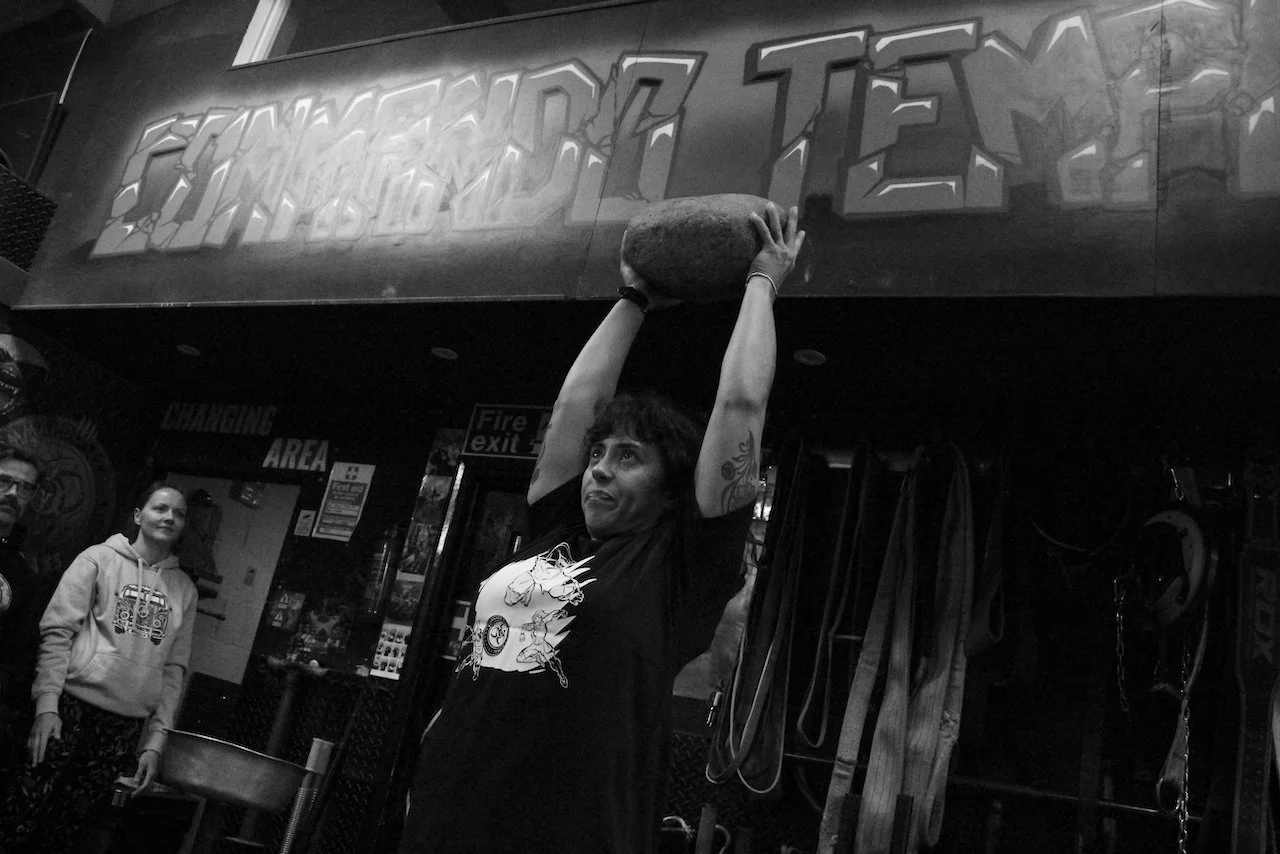
Previous competitions have included natural stones pressed overhead and stones taken to the shoulder. They tend to become some of the highlights of the weekend — partly because they're great tests of strength, but also because putting an unfamiliar lump of rock in front of someone creates a very different challenge from simply asking them to lift more weight on a familiar piece of gym equipment.
This year was no exception.
The challenge was simple:
Six awkward objects. Get every one of them onto your shoulder. You have 90 seconds.
Simple doesn't necessarily mean pleasant.
Strength Competition for Normal People
One of the best things about Temple's Strongest is the range of people who compete.
This isn't a competition exclusively for professional strongmen and women.
The people stepping up have normal lives and normal jobs. They're teachers, people working in IT, office workers and people from all sorts of backgrounds who happen to enjoy getting stronger and occasionally testing exactly what that strength can do.
The competition takes place across two days, with the men's and women's competitions held separately, and that means we get to see an enormous range of bodies, strengths and approaches tackling the same fundamental problems.
And when natural stones appear in an event, people have to actually spend time learning how to lift them.
That's where things get interesting.
The Shouldering Medley
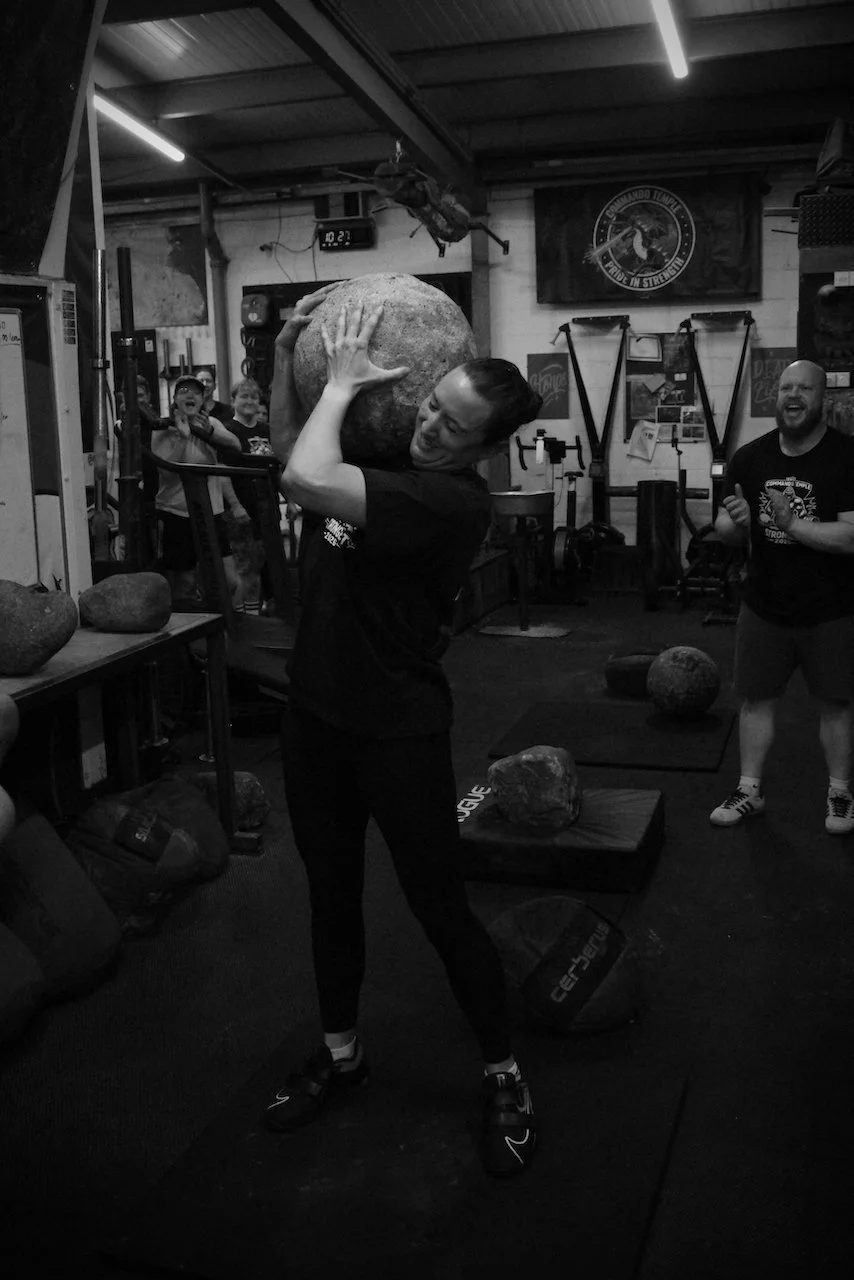
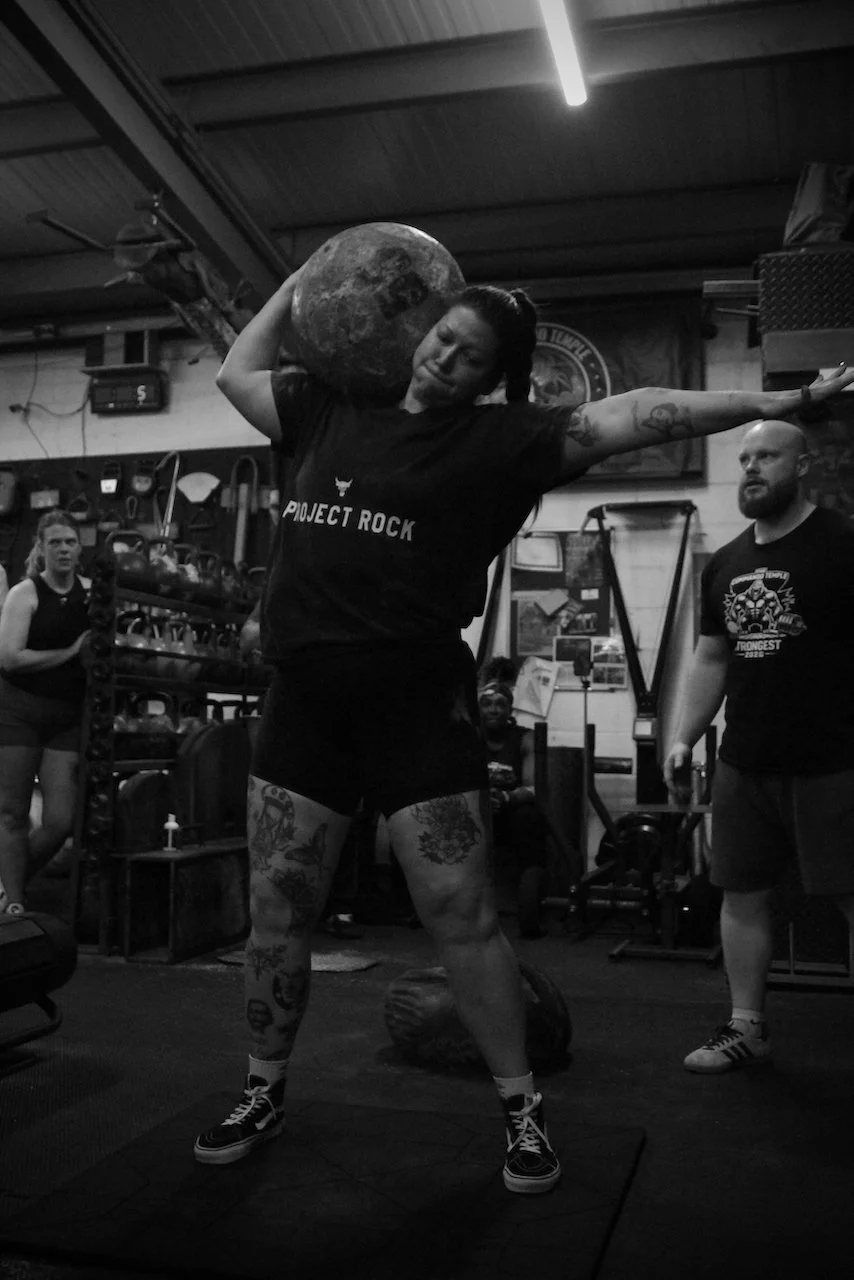
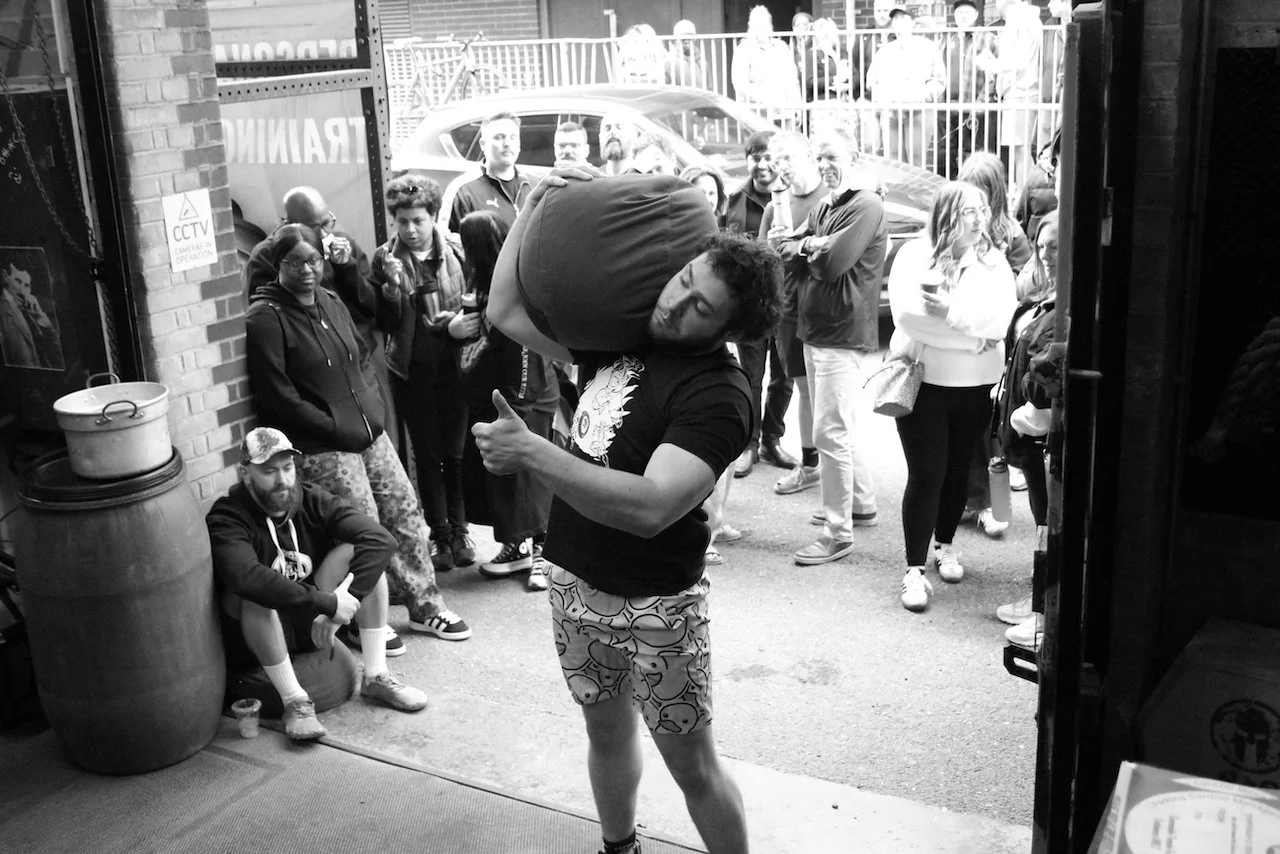
This year's stone event was a six-implement shouldering medley.
The order alternated between three different types of awkward object:
Sandbag → Atlas stone → Natural stone → Sandbag → Atlas stone → Natural stone
Each implement became progressively heavier as the competitors moved through the medley.
The objective was to get each object from the floor and successfully onto the shoulder before moving immediately onto the next.
The faster you could complete all six, the better.
There was just one other detail:
You had 90 seconds.
Why Shouldering Is So Brutal
Getting an object to the shoulder is one of the most energy-sapping things you can do in strength training.
First you have to break the weight from the floor.
Then you need to control it into the lap or body.
Then you have to extend through it.
And unlike simply loading an object onto a platform, you're not finished when it reaches chest height. You still have to manipulate the thing around your body and establish control on the shoulder.
Do that once with something heavy and it's hard work.
Do it six times.
Against the clock.
With three completely different types of object.
It becomes grim very quickly.
Which, naturally, made it an excellent competition event.
Six Objects, Three Different Problems
One of the things that made the medley particularly interesting was that the sandbags, Atlas stones and natural stones couldn't all be treated in exactly the same way.
A sandbag moves.
An Atlas stone doesn't.
A natural stone has its own shape, balance, texture and personality entirely.
Competitors had to continually adjust.
The natural stones were particularly good at exposing the difference between simply being strong and knowing how to apply that strength to an awkward object.
You have to find where to put your hands.
Work out where the weight wants to move.
Get your body around it.
Decide how you're going to transition it towards the shoulder.
And preferably solve all of that without spending half of your 90-second time limit staring at a rock.
Different Bodies, Different Solutions
Watching everyone work through the medley was also a great demonstration of why we enjoy stone lifting so much.
There wasn't one perfect way to do it.
Some of the bigger competitors could rely more heavily on brute force. Get hold of the object, generate an enormous amount of extension and muscle it towards the shoulder.
Other competitors couldn't afford to waste that energy.
For some of the smaller lifters, technique became even more important. They had to find efficient positions, use momentum intelligently and work with the shape of the object rather than simply trying to overpower it.
Both approaches could work.
And as fatigue accumulated, even the strongest competitors eventually had to start negotiating with the implements rather than bullying them.
By the later stages of the medley, everyone had something in common.
It was horrible.
Training for the Stones
One of the best consequences of putting natural stones into Temple's Strongest actually happens before competition weekend.
People have to practise.
Someone who might never have deliberately trained natural stone lifting suddenly has a reason to get their hands on one.
They start learning the pick.
The lap.
The extension.
How to get a stone onto the shoulder.
Then they discover that getting better at lifting awkward objects isn't simply useful for the competition. It's a fantastic way to develop strength.
Over the training period, we watched people become considerably more capable with the stones and, in many cases, simply become stronger than they'd ever been before.
That's exactly what we want to see.
Stones Are Problems to Solve
Natural stones have a habit of turning strength into a puzzle.
Two people can approach the same stone and solve it completely differently.
One person finds the perfect position immediately.
Another spends weeks figuring out why the stone keeps escaping.
Someone smaller discovers a technical solution that makes the lift look effortless.
Someone considerably bigger ignores all of that, grabs the thing and somehow gets away with it.
Eventually everyone develops their own relationship with the object.
That's why stones work so well in competitions like Temple's Strongest. They test strength, certainly, but they also reward practice, adaptability and the ability to solve a physical problem under pressure.
Add five other objects and a 90-second clock and things become considerably more interesting.
Another Year of Stones at Temple’s Strongest
Temple's Strongest remains one of the highlights of the year at the Commando Temple.
It's competitive, but it's also accessible. You don't have to build your life around strongman to take part. People train, challenge themselves, discover things they're unexpectedly good at and occasionally find themselves grappling with a natural stone in front of a room full of people.
And every year, Charlie manages to find another unpleasant way of incorporating stones into proceedings.
Long may that continue.
This year's shouldering medley was exhausting, technical, frustrating and — depending on exactly when you asked the competitors — probably quite good fun.
More importantly, it got another group of people practising with natural stones and discovering just how effective they can be.
Six objects. Three types of implement. Ninety seconds.
And by the end of it, everyone agreed on at least one thing:
Shouldering things is grim.
Temple's Strongest is held at the Commando Temple in Deptford, South East London, and is organised by Charlie Clay. Charlie also co-runs the Commando Temple Stone Club alongside London Stone Lifting founder Ben Waters. Stone Club runs weekly and gives lifters of all experience levels the opportunity to learn and practise natural stone lifting.